TTM Hospital Samoa Visit Challenges and Clinical Collaboration in Apia
Fog over Auckland was an early reminder that even the best-planned clinical visits depend on things outside anyone’s control. The trip to Samoa from 10 to 21 August 2026 began with delayed flights into Auckland, a missed connection to Apia, and then a two-day wait for the next available service. By the time the team reached Tupua Tamasese Meaole Hospital, the available clinical time had already been cut short.
That was not the start anyone wanted. Yet the visit became valuable in a different way. It offered a close view of the pressures facing TTM Hospital, the commitment of the local surgical team, and the importance of ongoing clinical relationships between Samoa and New Zealand teams.
The programme included ward rounds, outpatient clinics, and operating lists alongside local surgeons Dr Shaun Mauiliu and Dr Areta Samuelu, and registrars Rob Fa’ataga, Michael, and Ariel. Tauranga registrars Dr Ezra Nordstrom and Dr Jono Nosa also took part, gaining experience in a setting where clinical decision-making often has to account for limited equipment, medicine shortages, and infrastructure problems.

A delayed arrival reduced valuable clinical time
The first challenge came before the team reached Samoa. Fog delayed flights into Auckland, which led to a missed connection to Apia. With the next flight not available for two days, the planned programme had to absorb the loss.
For short clinical visits, two days matter. They can mean fewer outpatient appointments, less theatre time, and fewer chances for shared teaching at the bedside. They also affect the rhythm of a visit. A team arrives needing to settle in quickly, reconnect with local colleagues, and adjust plans without creating extra pressure for already busy hospital staff.
The delay made the remaining time more important. Once in Apia, the visiting team focused on the most useful work they could do within the shorter window:
Joining ward rounds with the local surgical team
Seeing patients in outpatient clinics
Supporting operating lists
Discussing management decisions with registrars and consultants
Learning how local systems shape safe care
The visit was not a fly-in, fly-out exercise. It was part of a continuing clinical relationship. That continuity matters, because trust cannot be built in a single theatre session or clinic. It grows through repeated contact, shared cases, and honest conversations about what is possible in the local setting.
Ward rounds showed the value of working side by side
Ward rounds formed a core part of the visit. They gave the Tauranga registrars and visiting team a chance to discuss patients directly with Dr Mauiliu, Dr Samuelu, and the local registrars. These conversations are often where the most useful learning happens.
In a hospital facing shortages, clinical judgement becomes even more central. Teams may need to make decisions without the full range of investigations, medicines, or equipment that would be expected in a larger New Zealand hospital. That does not mean care is less thoughtful. In many cases, it requires more careful thought.
During ward rounds, teams can ask practical questions:
What is the safest plan with the resources available today?
Which patients need urgent theatre time?
Which medicines are accessible, and what alternatives exist?
What can be managed locally, and what needs referral or transfer?
How can risks be reduced when systems are under strain?
These are not abstract questions. They affect each patient’s care. They also show visiting clinicians the difference between knowing a treatment pathway and applying it in a place where supplies may change from week to week.
For Dr Ezra Nordstrom and Dr Jono Nosa, the visit provided a valuable learning experience. The setting demanded flexibility, respect, and close attention to local knowledge. It also showed how much can be learned from colleagues who manage complex workloads with fewer supports.
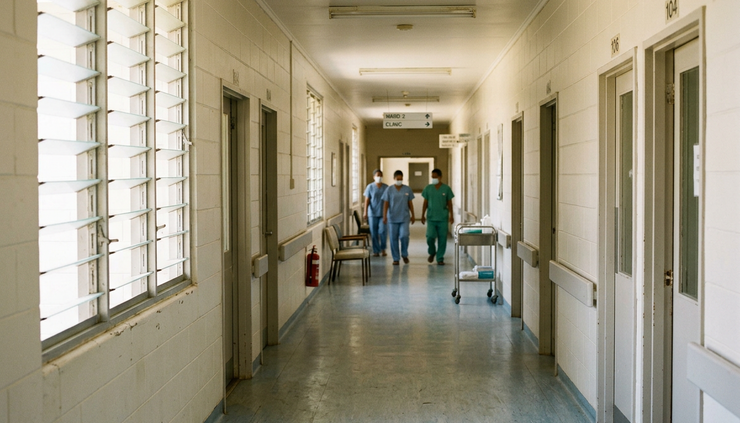
Outpatient clinics brought local pressures into focus
Outpatient clinics gave another view of the hospital’s day-to-day demands. Clinics are where surgical problems are assessed, operations are planned, and follow-up care is arranged. They are also where limits in the wider system become visible.
When medicines are scarce, a clinic decision is not just a clinical decision. It becomes a supply decision as well. If a common antibiotic is out of stock, the team has to consider what is available, whether it is suitable, and what risks come with the substitute. If theatre access is uncertain, timing becomes harder. If sterilised packs are limited, even routine operating needs more planning.
This is one of the reasons visiting teams need to listen before offering advice. A recommendation that makes sense in Tauranga may be difficult or impossible in Apia if the right supplies are unavailable. Good collaboration starts with understanding the constraints.
The local team’s knowledge is central. They know which pathways work, which suppliers are reliable, and which patients face barriers to follow-up. They also know the hospital’s pressure points in a way that no visitor can grasp immediately.
Clinical collaboration works best when visiting clinicians add support without assuming control. In this visit, that meant working alongside the local surgeons and registrars, not replacing local decision-making.
Theatre work was affected by serious infrastructure problems
The operating lists were shaped by several major deficiencies at TTM Hospital. The most concerning issues included the broken liquid oxygen plant, the broken theatre sterilisation machine, intermittent air conditioning in operating theatres, and significant shortages of pharmaceuticals.
These problems are not minor inconveniences. They affect safety across the whole hospital.
The broken liquid oxygen plant means the hospital must rely on bottled oxygen. Bottled oxygen can support patient care, but it creates extra logistical risk. Cylinders need to be supplied, stored, moved, checked, and replaced. If demand rises or deliveries are delayed, the pressure on clinical services increases.
The broken theatre sterilisation machine creates a different but equally serious problem. Sterile surgical packs have to be brought in from Pago Pago. That workaround allows surgery to continue, but it depends on shipping and supply chains. It also reduces flexibility. If the right pack is not available at the right time, theatre lists may need to change.
Intermittent air conditioning in operating theatres adds another layer of concern. Theatre temperature and ventilation affect staff comfort, equipment, infection control, and patient safety. In a humid tropical climate, unreliable cooling can make the operating environment harder for everyone.
Pharmaceutical shortages add pressure across wards, clinics, emergency care, and theatres. When common antibiotics are out of stock, clinicians must adjust. That can mean using second-line options, delaying treatment decisions, or referring cases into an already strained pathway.

Safety concerns extended beyond the operating theatres
It would be easy to see these problems as theatre issues alone. They are not. A broken oxygen plant affects emergency care, ward care, anaesthesia, recovery, and patients needing respiratory support. Sterilisation issues affect surgical access, infection risk, scheduling, and staff workload. Medicine shortages affect almost every department.
The combined effect is greater than any single fault.
When core systems fail, staff have to spend more time solving supply problems. That leaves less time and energy for clinical work. Workarounds become routine. The risk is that the extraordinary effort needed to keep services running starts to look normal.
At TTM Hospital, the staff continued to apply themselves diligently despite these barriers. That commitment deserves clear recognition. It also should not hide the seriousness of the situation. Dedicated staff can reduce risk, but they cannot fully compensate for broken oxygen systems, broken sterilisation equipment, medicine shortages, and unreliable theatre air conditioning.
Safe care depends on skilled people, but it also depends on the systems and tools that allow those people to do their work.
This is the difficult truth of hospital support in resource-limited settings. Staff resilience is admirable, but resilience should not be the main safety plan.
The local team carried the service with skill and persistence
The visit highlighted the strength of the Samoan surgical team. Dr Shaun Mauiliu, Dr Areta Samuelu, and the registrars Rob Fa’ataga, Michael, and Ariel continued to provide care in difficult circumstances. Their work required technical skill, judgement, and persistence.
The local registrars were central to the visit. They bridged ward care, outpatient clinics, and theatre lists. They also helped visiting clinicians understand what could be achieved within current constraints.
That kind of professional exchange is one of the most valuable parts of visiting programmes. It is not only about teaching. Visiting clinicians learn as well. They see different disease patterns, different health system pressures, and different approaches to triage and communication.
For New Zealand registrars, experience in Samoa can broaden clinical thinking. It can also build humility. In a well-resourced hospital, a clinician may take oxygen supply, sterilised instruments, antibiotic availability, and climate-controlled theatres for granted. In Apia, those assumptions may not hold.
This does not make the work less meaningful. It makes partnership more important.
A shorter visit still offered lasting value
Despite the delayed arrival and reduced clinical time, the visit proved worthwhile. The team was able to take part in meaningful clinical activity, support existing relationships, and gain a clearer understanding of the hospital’s current condition.
For Dr Ezra Nordstrom and Dr Jono Nosa, the experience was especially valuable. Registrar training is shaped not only by procedures and case numbers, but by the environments in which care is delivered. Seeing how a team functions under pressure can teach lessons that stay with clinicians throughout their careers.
Those lessons include:
Respect local expertise
Ask what resources are actually available
Avoid assumptions based on New Zealand systems
Recognise that infrastructure is part of patient safety
Value long-term relationships over one-off visits
The trip also reinforced the need for practical support. Clinical collaboration helps, but it cannot solve structural problems by itself. A hospital needs dependable oxygen, working sterilisation, reliable theatre conditions, and essential medicines. Without these, even the most committed staff face avoidable risk.

What this visit made clear
The August 2026 visit to TTM Hospital in Apia began with delays and ended with a clearer sense of both challenge and commitment.
The challenges were serious. A broken liquid oxygen plant, broken theatre sterilisation machine, medicine shortages, and intermittent theatre air conditioning all created safety concerns. These issues affected far more than the operating lists. They touched the whole hospital.
The commitment was just as clear. Local surgeons and registrars kept working, teaching, assessing, operating, and caring for patients in conditions that demanded constant adaptation. The visiting team contributed where it could, but it also learned from the skill and perseverance of the Samoan staff.
The main takeaway is simple: clinical visits matter most when they strengthen relationships, respect local leadership, and keep attention on the systems that make safe care possible. In Apia, the people are doing the work. The infrastructure now needs to match their effort.


Comments